


70th Anniversary of Sternbaum Trial
Today is Part IV of a four-part series on the Dec. 4, 1952 murder of Leah Sternbaum and the ensuing trial of her husband Max, which began in February, 1954, in Richland County Common Pleas Court.
EDITOR’S NOTE: This is the fourth in a four-part series. Part I was on Feb. 26. Part II was on Feb. 27. Part III was on Feb. 28.
MANSFIELD — No trial in the history of Richland County had ever drawn the media attention the Max Sternbaum case did.
The capital murder trial that found Sternbaum not guilty in the Dec. 4, 1952 slaying of his wife Leah attracted nationwide attention with state wire services transmitting content coast to coast.
Locally, the News Journal printed 186,400 words related to the case, sometimes dedicating entire inside pages to verbatim testimony from key witnesses.
The jury of 10 men and two women took a half-dozen votes before arriving at a not guilty verdict. The first vote was 7-5 in favor of acquittal. Each succeeding vote featured a juror dropping off the guilty train.
“That indictment should never have been returned,” defense attorney Paul Herbert said after the verdict. “The prosecutor was obviously not ready with any sort of a case.
“He should have analyzed his position and realized he was in no position to try a first-degree murder case.
“Now, after all the money has been wasted in trying the case, the Mansfield Police Department can go out and solve the case.”
Needless to say, that never happened.
Prosecutor Theodore Lutz announced the arson case against Sternbaum would be dropped.
“It stands to reason that whoever murdered Mrs. Sternbaum set fire to the building to conceal the crime,” Lutz said. “The jury has acquitted Mr. Sternbaum and there is no point now in trying him on the arson indictment.”
David Sternbaum, Max’s older brother and suddenly the family patriarch after father Carl Sternbaum died the day before the verdict, said a $1,000 reward was still available for anyone offering information leading to the arrest of Leah’s killer(s).
“The reward is still valid, absolutely,” David Sternbaum said. “It was never made for any other reason than that we wanted those that committed the crime caught and punished.”
The News Journal published an editorial that ran along the bottom of the front page in the same edition announcing the verdict.
In it the newspaper lauded the attorneys, the court and the jury. The blame for lack of a conviction was placed solely on the Mansfield Police.
“This was, we believe, a fair trial with a verdict earnestly reached,” the editorial stated. “Evidence at the trial and, even more surely, a lack of evidence show that a sound job of police work simply was not done at the time of the crime.
“Recriminations are useless now against those who fumbled the investigation in the very beginning. But this unsolved murder should sound as a siren, shrilly warning the people of Mansfield that they have not been protected at all in the way they have a right to insist that they should be protected.”
Life changed for the Sternbaum family.
Less than two months after his acquittal, Max Sternbaum married Lillian (Terry) Weisblat, the former roommate of “The Other Woman” Margaret Rozenman, on May 2, 1954.
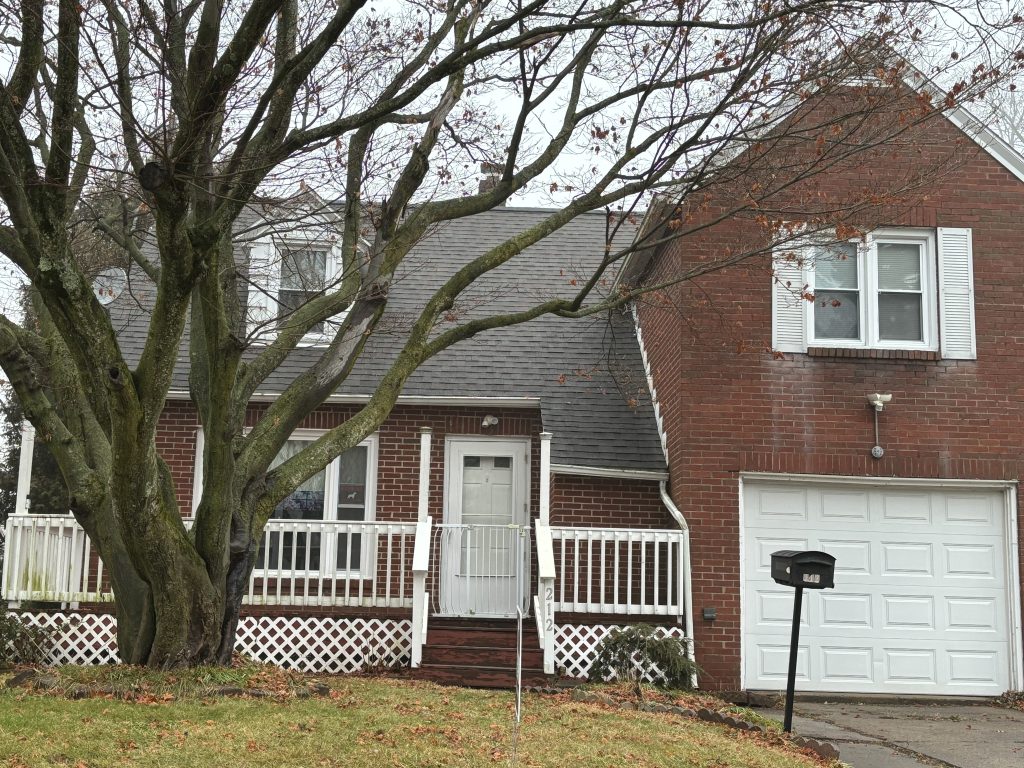
The marriage license was filed on May 8, 1954, and after a honeymoon the newlweds returned to live at the house that Max and Leah had shared, at 212 Richland Ave., just off Sturges Avenue in Mansfield.
On Nov. 12, 1955, the nine Sternbaum Complete Food Mart locations, including four in town, were sold to the Tracy & Avery Co. of Mansfield.
The Sternbuam family then relocated to Florida.
Max’s three children with Leah included Marc, the oldest, followed by twins Karl and David. The marriage to Terry produced a daughter, Carla.
Upon moving to Miami, Max began using his first name, Ernest. The family lived in Coral Gables, a suburb of Miami, and he worked in advertising and was a manufacturer’s representative in the graphics business.
Eventually, Max became president of the Royal Cards Co., a business-card printing firm in Miami. He died of a stroke at age 57 on March 14, 1976 in South Miami Hospital.
His obituary listed his name as Ernest M. Sternbaum. He was survived by his wife Lillian and his children Marc, Karl and David, and daughter Carla, along with three grandchildren.
The 212 Richland Ave. home in Mansfield was seized by the IRS for nonpayment of taxes, while it was still in Sternbaum’s name. It was sold at auction on May 8, 1958 for $12,000.
Max’s mother Mary died May 15, 1970 in Miami at age 81. She was buried here at the B’nai Jacob Cemetery in Ontario next to her husband, Carl.
Max’s wife Terry died on Jan. 7, 2004 in San Antonio, Texas.
In the end, it was Herbert, Max’s defense attorney that served multiple terms as Ohio’s Lieutenant Governor, who had the final, chilling word on the case.
Former News Journal reporter Rex Hess, who helped cover the Sternbaum trial during a 51-year career in local media, recounted a speech delivered by Herbert, a retired Ohio State Supreme Court Justice, more than a quarter century after the crime.
The story was reported in a column authored by Goerge Constable in the Sept. 3, 1978 edition of the News Journal.
“You know, Max was acquitted,” Hess told Constable with a twinkle in his gray eyes. “Sometime later, Paul Herbert (Max’s co-counsel) was up at the old Leland (hotel) giving a speech.
“Jerry (Judge G.E. Kalbfleisch, who presided over the Sternbaum Trial) introduced him.
“Herbert got up and started out with this remark: ‘I’m always glad to come back to Mansfield, where they can get away with murder.’ “
RELATED

The Trial(s) of the Century: Sternbaum vs. Boyle
In this episode Richland Source managing editor Larry Phillips and city editor Carl Hunnell compare and contrast the two most famous murder cases in Mansfield history. The Sternbaum trial was the subject of a four-part series that was published earlier this week on Richland Source. The murder of Leah Sternbaum took place on Dec. 4,…
