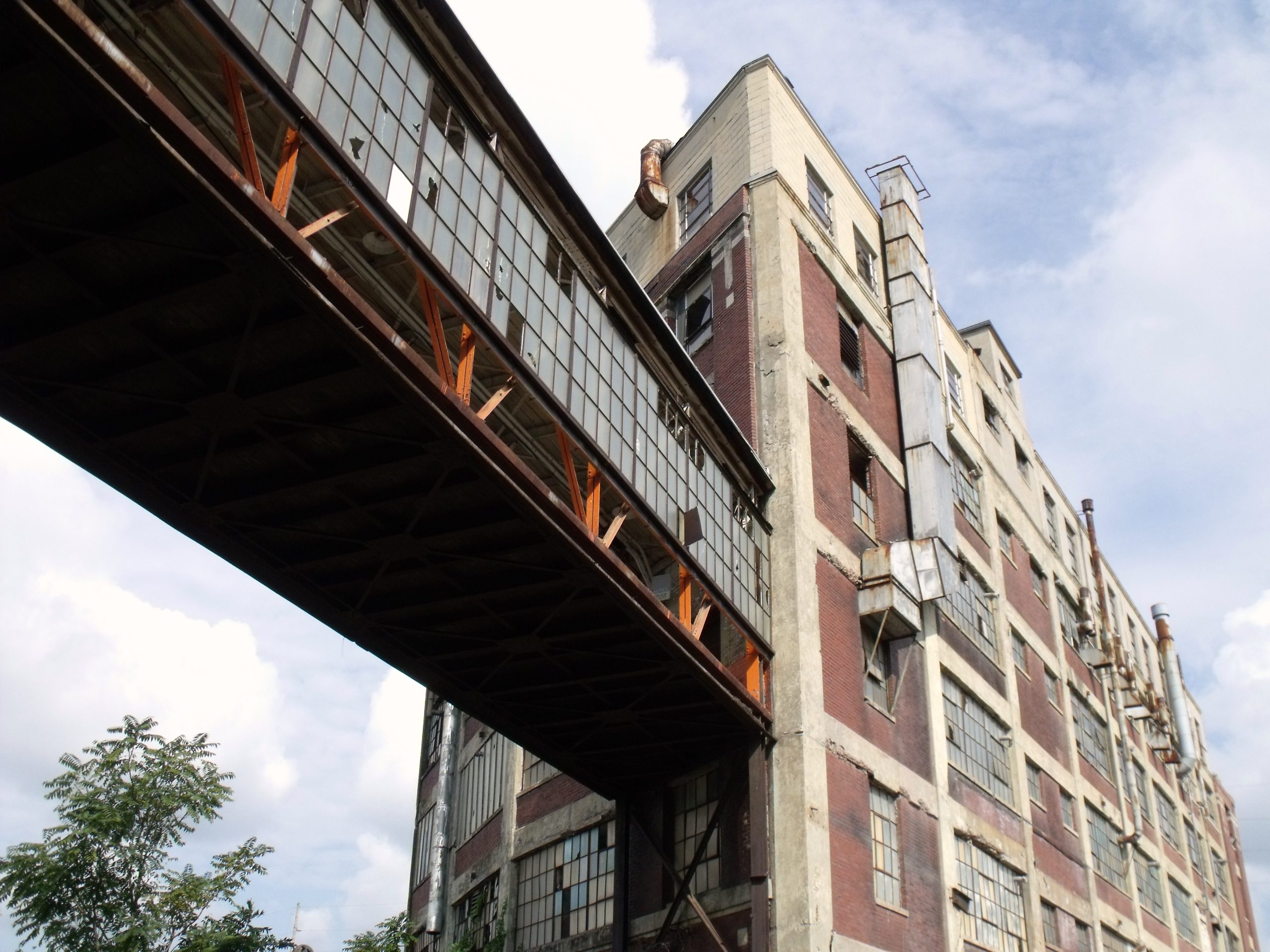
MANSFIELD — For the first time in a long time, Mansfield’s Westinghouse site has a future, if we allow ourselves to imagine it.
On Wednesday, the Richland County Land Bank approved a contract that could lead to the donation of the former Westinghouse property, setting the stage for the renovation or demolition of the 30-year eyesore.
The Land Bank board voted to approve an “environmental assessment agreement” with Pamela Coffman, trustee of the Coffman Revocable Living Trust, which owns the land at 200 Fifth Ave. on the city’s east side.
The Land Bank will not officially accept the land without the completion of the environmental assessment. Testing is expected to take three months, according to Land Bank manager Amy Hamrick.
The effort also has the potential to acquire other former Westinghouse properties, including the 13-acre “concrete parcel” nearby, owned by Mansfield Business Park, LLC, of Richfield, Ohio; and a vacant building, owned by Electrolux, based in North Carolina.
Assuming all the pieces fall into place, the question still remains: What happens next?
For Richland County Commissioner Tony Vero, a member of the Land Bank who has led the Westinghouse effort, his dreams for the property are simple.
“I just want to see something,” Vero said. “Maybe it’s a bunch of park land. Maybe it’s used by another major employer in the county. Right now there’s no potential whatsoever.”
Assuming for a moment the property sails through its environmental assessment with flying colors, Vero said the beauty of Westinghouse’s future is that it falls to local control.
“We as the Land Bank can listen to proposals, explore something similar to Ariel-Foundation Park, listen to developmental issues, or maybe a private investor decides to save the building,” Vero said.
“I don’t know the answer; ultimately it will involve developing that land in some capacity, and having the land be returned to some sort of use in this community, whatever it may be.”
Fortunately, there are plenty of examples in Ohio and beyond to model the future of the Westinghouse land.
Nearly 30 miles south of Mansfield is an ideal place to start, with former Mount Vernon mayor Richard Mavis summarizing the key to any successful redevelopment project:
“You have to realize what you have and then get the right people together to do it,” Mavis said.
Ariel-Foundation Park, located in Mount Vernon, is a 250-acre example of adaptive reuse. Created on the former site of a glass-making factory, the park features walking trails, ponds, islands, a labyrinth, sculptures, reflecting pools, event spaces, a museum and an observation tower.
What’s most unique about the park is its strong sense of place, rooted in the site’s industrial past. The ruins of the Pittsburgh Plate Glass Company — brick facades, stair and elevator towers, a giant smokestack — remain strategically intact, embraced by park designer Ted Schnormeier.
Schnormeier managed the site development because he didn’t want the park to suffer the same fate he saw other projects fall to — death by committee.
Total project costs are estimated between $8 and $12 million. Everything was done at no cost to the city through donations from private individuals, foundations, businesses and institutions.
Today the park is owned by the city, but the Foundation Park Conservancy maintains the park’s buildings. City staff mow the property, but Mount Vernon is reimbursed by the conservancy, which pays for the maintenance through an endowed fund.
In the opposite direction, nearly 100 miles east of Mansfield, yet another abandoned industrial site is rediscovering its potential thanks to a local organization dedicated to Youngstown’s rebirth.
The Western Reserve Port Authority, an agency dedicated to promoting growth and economic development in the Mahoning Valley, is preparing to accept a donation of land where the old Republic Steel plant once sat.
“We just need to be comfortable with how much property is involved. We need to be comfortable that we are able to take care of whatever potential liabilities that could come up with this,” port authority CEO John Moliterno told The Vindicator.
“We’re not sure if there are any yet, but that is what we are working on right now,” he said. “We only see good things that could potentially happen at that site.”
The property would be in good hands: the port authority has helmed a number of community development projects that redevelop unusable, contaminated commercial sites. It is eligible for receiving federal grants that can help eliminate astronomical costs while making these sites more valuable to business investments.
The Environmental Protection Agency offers a Brownfield Grant that funds the assessment and clean-up of hazardous materials found at brownfield sites. It is unknown yet if the Westinghouse site will be classified as a brownfield, and therefore eligible for federal grants.
The port authority also spearheads the Mahoning River Corridor Initiative, which promotes economic development, recreation and conservation on sites along the banks of the Mahoning River, challenged by abandoned industry and underdeveloped infrastructure.
However, the most ambitious example of organized, adaptive reuse comes from Oklahoma City.
A capital improvements program named MAPS 3 is part of a greater improvement plan for Oklahoma City that was voted on by the community in 2009. The citizens imposed a one-cent sales tax initiative upon themselves, which to date has translated to over $1 billion of community improvement projects for the city — debt-free.
Scissortail Park in downtown Oklahoma City is a result of that MAPS 3 initiative. An independent nonprofit 501(c)(3) organization manages and operates the park.
The park project was planned using a public, resident-driven process including input and guidance from the MAPS 3 Park subcommittee, MAPS 3 Citizens Advisory Board, and City Council.
The park project budget was $132 million to build a 70-acre downtown park from empty land between overpasses. It includes a cafe, lake, event pavilions, great lawn and stage — and, if you can believe it, even a roller-skating rink.
What would you like to see done with the Westinghouse property? Tell us using the form below: